

.
.
.
lit, a startup in the Zest portfolio, has developed a proprietary hardware and software solution that enables households and businesses to monitor, understand and optimise their energy consumption in real time. By combining a plug-and-play IoT device with machine learning algorithms, the platform turns energy data into actionable insights, helping reduce waste, costs and emissions.
We invested in lit in 2023 through the Zero accelerator programme, making an initial investment via a SAFE and reaffirming our confidence in the company with a follow-on investment in 2025. From our very first meeting, we were impressed by the founders’ entrepreneurial mindset, their ability to learn quickly and their capacity to combine strategic vision with execution—essential qualities at the earliest stages of a startup’s journey.
lit operates in a market that is set to become increasingly strategic. The energy transition, electrification and the growing need to reduce consumption, costs and emissions are creating structural demand for technologies that turn energy data into operational decisions. Against this backdrop, lit stands out for its proprietary technology, which makes visible what usually remains hidden: how, when and where energy is consumed.
The startup’s story perfectly embodies our investment thesis: backing founders who tackle structural problems with proprietary technologies, strong execution capabilities and international ambition. Signing its first multi-million-euro contract and moving from validation to commercial growth confirm the progress made over the past few years.
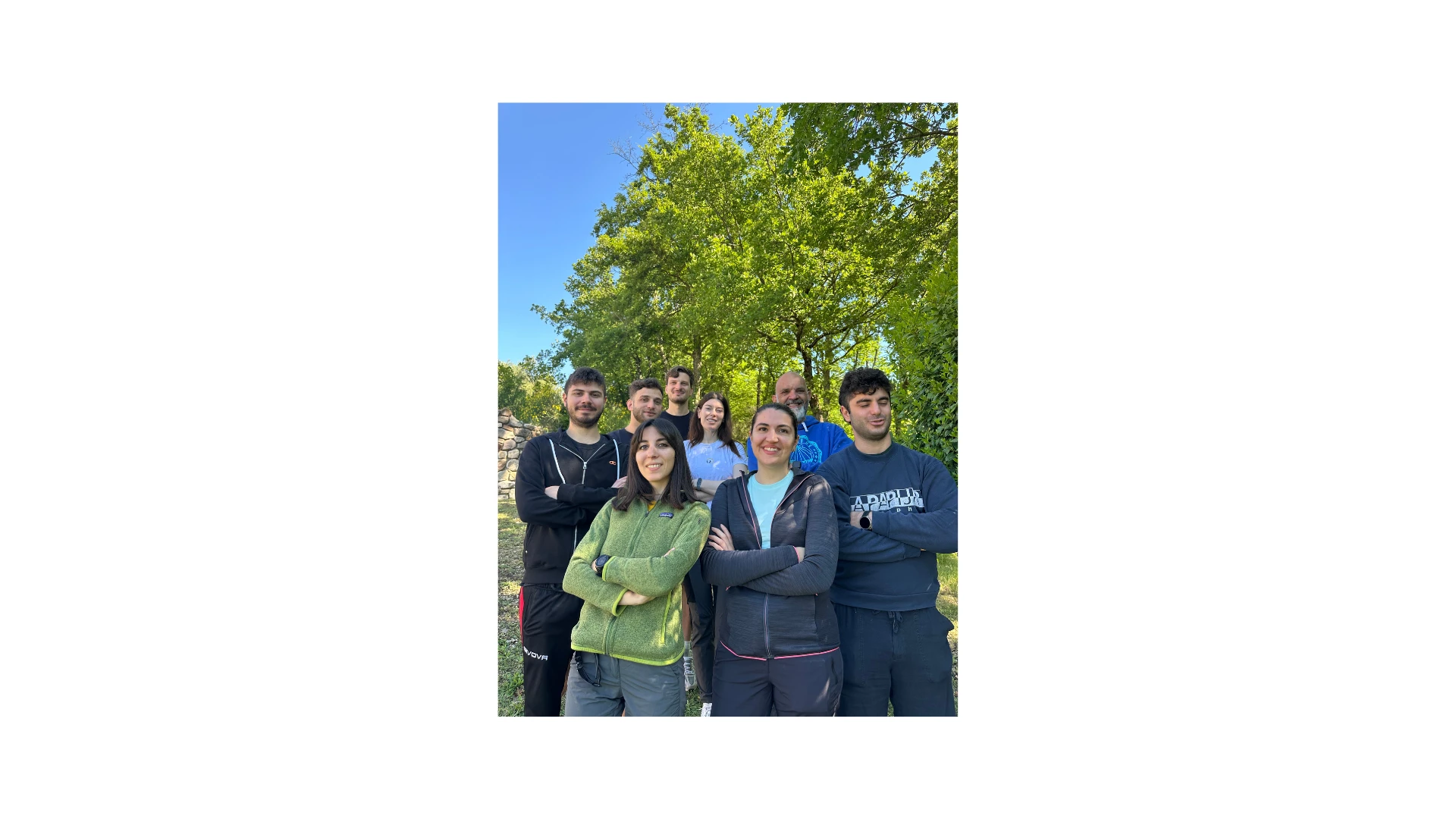
In this new edition of Meet the Portfolio – Stories Behind the Investment, we speak with Alessia Lucentini about the journey that led her and her team to build lit, the challenges they faced along the way and the vision that continues to drive its growth.
lit grew out of a real problem.
At the height of the energy crisis and the pandemic, while living away from home, we realised we had no control over our energy bills and no simple tools to understand how to reduce our consumption.
That prompted a question: why does monitoring energy have to be so complicated?
That is how lit began: an intuitive, easy-to-install tool designed even for people without technical expertise, helping them reduce waste and costs.
2. When did you realise it could become something “real”? What was the first tangible sign that made you think, “Okay, there’s something here”?
Talking to other people, we realised one thing: it was not just our problem.
Energy market volatility was putting households and businesses under pressure. That was when we had our confirmation: if a solution had helped us, it could also have a positive impact on many others.
3. What was the most challenging step in turning the idea into a product? What did you have to learn - or unlearn - along the way?
Building a product teaches you an important lesson: speed alone is not enough.
Creating something that truly works takes time, listening and continuous iteration. The biggest challenge was bringing a technology from research to market while building a sustainable business model for everyone involved: those who produce it, those who sell it and those who buy it.
Monitoring energy should be simple for everyone.
4. How did you validate your initial market assumptions? What surprised you most when engaging with your first users or customers?
We had an MVP and little time to validate the market. So we chose the simplest approach: a landing page, a shopping cart and a smoke test.
People were actually placing orders.
We generated around €90,000 in potential orders. At checkout, we explained that the technology was not yet available and collected email addresses. Those people later became our first beta testers when the product launched.
5. Looking back at your evolution, what was the most significant iteration that changed the startup’s direction?
The most important change was the shift from a B2C to a B2B model.
Initially, we thought our customer was the end consumer. Then we realised the problem was even more acute for businesses.
Following that pivot, the product, go-to-market strategy and business model became much clearer.
The pivot from B2C to B2B changed our future.
6. What convinced you to choose Zest as a partner? What were you looking for in an investor?
We were looking for a partner with a strong network and the ability to support us in subsequent funding rounds.
More than an investor, we wanted someone with whom we could build a long-term growth journey, beyond a capital injection. Sharing the same vision was essential to us: growing quickly, but sustainably.
7. How did Zest’s support go beyond capital?
The added value came from ongoing dialogue, with honest feedback and constructive criticism at the most important moments.
They supported us with fundraising, access to their network, visibility and operational execution.
We often say that Zest has been our “fourth founder”.
8. If you had to describe what “building with Zest” means in one sentence, what would you say?
Building with Zest means growing exponentially together, not just in terms of capital, but also in expertise, networks and shared development.
9. What inspired you to become founders? Was there a person, an experience or a moment that had a decisive impact?
For us, becoming founders was, above all, a creative act.
The freedom to shape reality, make decisions and accept their consequences, for better or worse, is what drew us in this direction.
It is a huge responsibility, but also the most direct way we know to build something of our own and make a tangible impact.
10. How do you manage the team during periods of pressure or uncertainty? What is your guiding leadership principle?
We live in a rapidly changing world. When everything accelerates, we return to our values, which serve as our point of reference.
We have a Culture Deck that defines how we work and lead.
Our guiding principles are:
Talent and accountability: everyone has a real impact on the team.
Continuous learning: curiosity and constant improvement.
Direct feedback: clear communication, without unnecessary filters.
Empathy and collaboration: creating a healthy environment that puts people first.
Deliver “wow”: building products and experiences that surprise and delight.
11. On such an intense journey, what keeps you grounded? Habits, rituals, passions, key people…
We wake up every day knowing we can have a positive impact on the planet. That is what motivates us.
Personally, I keep a counter tracking the CO₂ emissions avoided through our solution. Seeing that number grow every day makes the impact of our work tangible.
Zest has been our “fourth founder”.
12. What is the next major goal for lit?
To help decarbonise Italian SMEs, shifting tens of TWh each year from passive energy consumption towards self-consumption and intelligent energy demand management.
13. What is your greatest ambition?
To become the technology layer that makes green energy accessible, enabling widespread self-consumption and reducing dependence on the traditional power grid.
14. If you could leave a message for other founders starting out today, what would it be?
Start by building something truly useful.
If it does not solve a concrete problem, it is unlikely to work.
15. If you could meet someone from the world of entrepreneurship, past or present, who would you choose, and what would be the first question you would ask them?
I would choose Maria Bellisario.
I would ask her: “Is there a difficult decision you are grateful for today, even though it seemed impossible at the time? How do you know when something is truly worth pursuing all the way?”
16. If you had not embarked on this entrepreneurial journey, what path would you have taken—and why?
I would probably work at an investment fund.
I would still be involved in innovation: I would simply look at it from a different perspective.